
Last month I sat in on a client meeting where three different people used three different words to describe the same kind of decision. One called it "picking a library." Another called it "choosing a framework." A third asked if the project would be "locked into the platform." Everyone nodded along like they understood each other. Nobody stopped to ask if they were even talking about the same thing.
I could see it on the client's face: she had no idea. And honestly, that's normal. These three words get used interchangeably by developers all the time, even though they describe three very different levels of "how much structure comes built in." If you're signing a contract or reading a proposal, that difference can change your budget, your timeline, and how stuck you are with one vendor five years from now.
So let's clear it up, with an analogy I use with almost every client who asks.
Picture a Toolbox, a House Frame, and a Plot of Land
Imagine you're building a house.
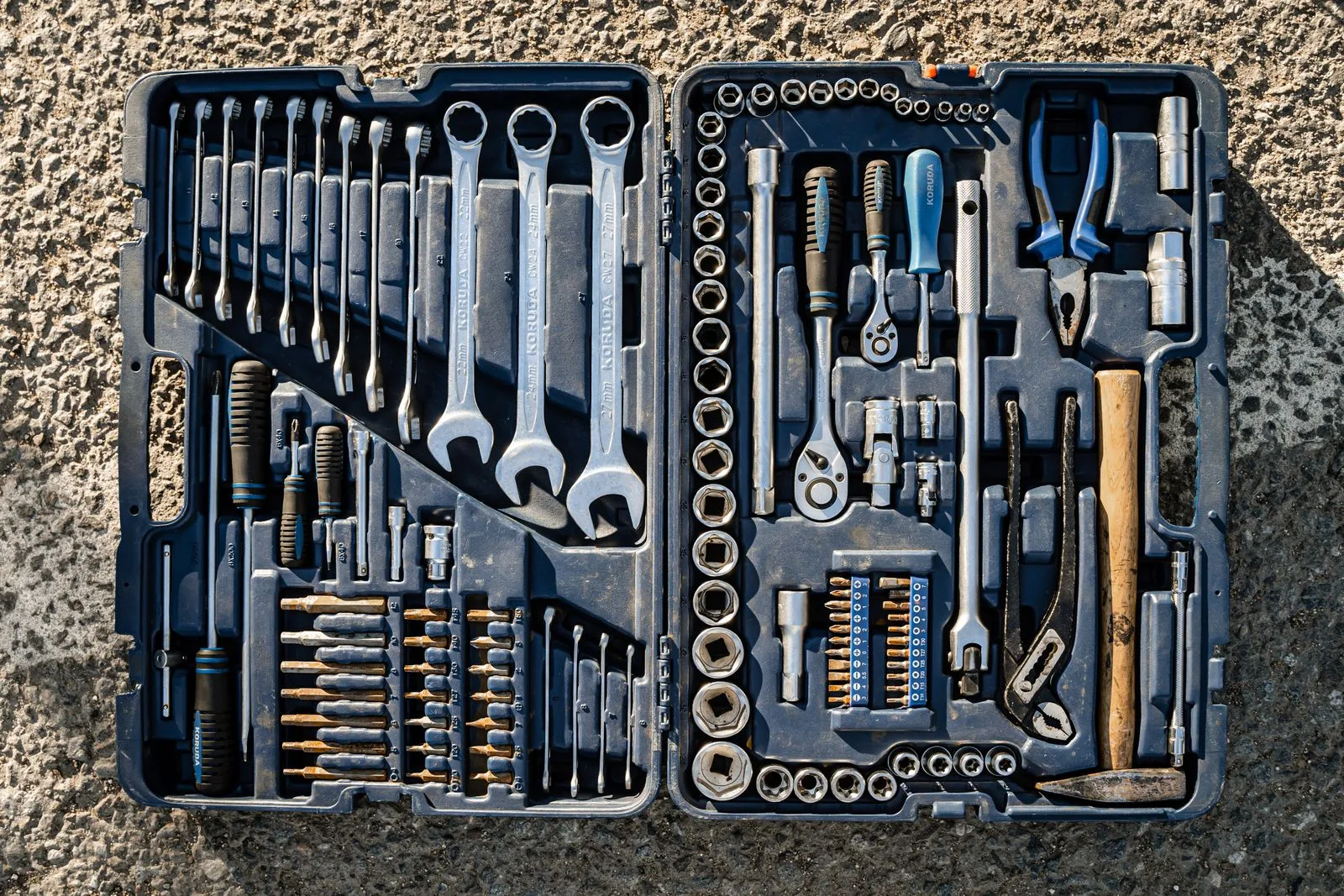
A library is a toolbox. It holds a hammer, a saw, a level. You decide when to pick up the hammer and what to build with it. The toolbox doesn't care what house you're building. It just waits for you to reach in.
A framework is a pre-built house frame. The walls, the rooms, and the rough plumbing are already there, laid out the way someone else designed them. You still choose the paint, the furniture, and the finishes, but you build inside that frame, not around it. If you want a room the frame never planned for, that becomes a much bigger job.
A platform is the entire plot of land, already connected to water, electricity, and the road. You don't just get a frame. You get the ground it sits on, the utilities that keep it running, and often the rules for what you're allowed to build there at all.
Same construction project. Three completely different levels of "how much is already decided for you." Software works the same way.
What a Library Actually Is
A library is a chunk of code someone already wrote so you don't have to write it yourself. You call it when you need it, and it hands back an answer.
Say your website needs to show dates in a clean, readable format, or needs to check that an email address looks real. Someone has already solved that exact problem and packaged the solution as a library. A developer adds it to your project and calls it whenever a date needs formatting. The rest of the time, it just sits there, waiting.
The key thing to notice: you stay in charge. Your code decides when the library runs, not the other way around. It's a tool in the toolbox, not a set of rules you have to follow.
What a Framework Actually Is
A framework flips that relationship around. Instead of you calling it when you need it, it calls your code, on its own schedule, in the places it decides.
Think of a framework as that pre-built house frame. It has already decided there's a kitchen here and a bedroom there. Your job is to fill in those rooms the way the frame expects. Popular examples include React and Angular for building what customers see in a browser, or .NET and Ruby on Rails for building the business logic behind the scenes. When a customer clicks "submit" on a contact form, it's usually the framework that notices the click and hands control to your code at exactly the right moment, not your code reaching out to notice the click itself.
This is genuinely useful. It means a developer isn't reinventing "how does a website react to a button click" from scratch on every single project. But it also means your project inherits the framework's opinions about how things should be organized. Fighting those opinions gets expensive fast, which is one reason picking the right framework early matters more than most business owners expect.
What a Platform Actually Is
A platform is the whole plot of land. It isn't just code you add to your project. It's the environment your entire project runs inside, including the servers, the security, the login system, and often a marketplace of ready-made add-ons.
Shopify is a platform for running an online store. Salesforce is a platform for running a sales team's tools. Amazon Web Services is a platform for running almost anything, with hundreds of connected services already wired together. When you build "on" a platform, you're not just borrowing code. You're renting land, and the landlord sets real rules about what you're allowed to build, how much it costs as you grow, and how hard it is to move somewhere else later.
Why This Distinction Matters When You're Reading a Proposal
Here's the lightbulb moment I want you to walk away with: these three choices carry very different risks and very different costs, and a proposal that blurs them together is hiding something worth asking about.
A library is low-risk. If it turns out to be the wrong tool, a developer swaps it for a different one, and the rest of your project barely notices.
A framework is a medium commitment. Switching frameworks later usually means rebuilding large chunks of your application, not just replacing a single tool.
A platform is the biggest commitment of the three. Your data, your customer accounts, and often your entire business process can end up living inside someone else's land. That's not automatically bad. Plenty of successful businesses run entirely on a platform like Shopify or Salesforce because it's faster and cheaper than building everything from scratch. But you should walk into that decision knowing you're choosing a landlord, not just picking a tool off a shelf.
Next time someone hands you a technical proposal, ask one simple question: "Is this a tool we're using, a structure we're building inside, or land we're renting?" You'd be surprised how often that question changes the whole conversation. It connects closely to what an API actually is, the connective tissue that lets tools, frames, and land all talk to each other, and it's worth understanding before you commit to a platform, since the risk of vendor lock-in grows the deeper you build into someone else's land.
If you're staring at a proposal right now and can't quite tell which of the three you're actually being asked to commit to, I'm happy to walk through it with you. Let's talk through your situation.